
生活大爆炸第六季
教研信息 | 品悠悠古韵,享“研”途芬芳——桐乡市小学语文古诗文研讨活动_我的网站

A |
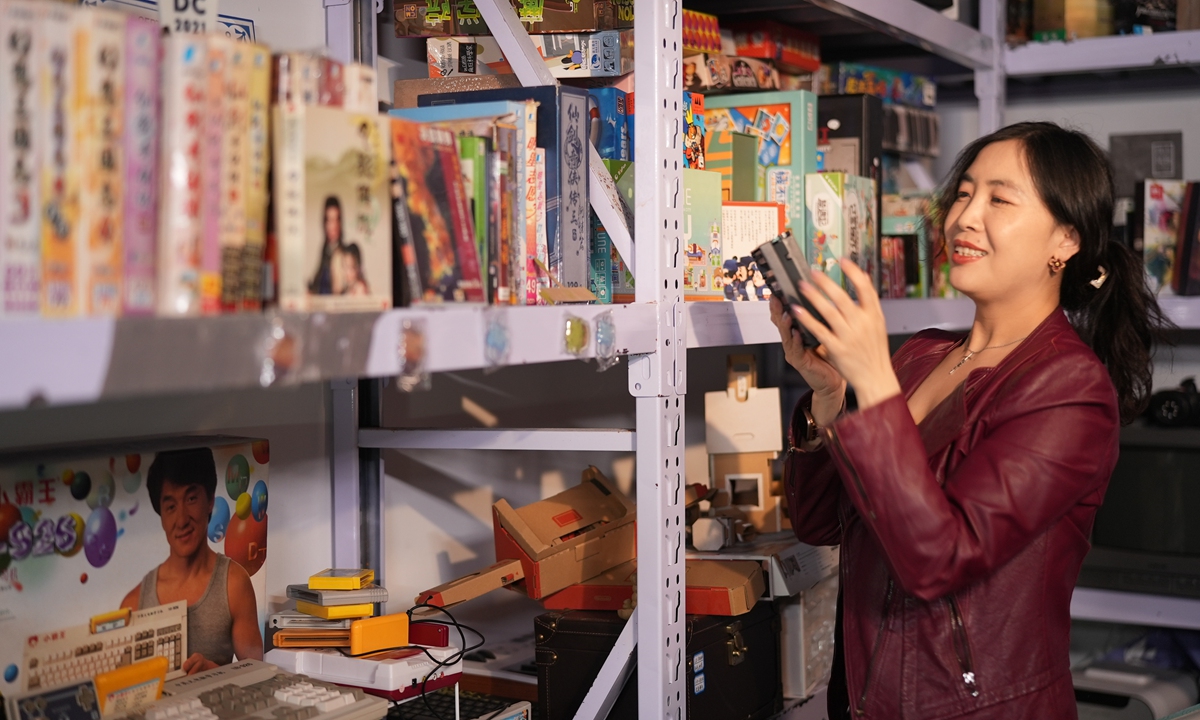
Inside Beijing's Homoludens Archive, shelves are filled with books, game consoles, game cartridges and other materials tracing the history of video games. For Liu Mengfei, the archive's director and chair of the academic committee of the Gamification Professional Committee, these collections preserve more than the evolution of games, they also capture the cultural memories of a generation.
A PhD in history from Tsinghua University, Liu has spent more than a decade studying the social impact of games, the role of games in history and digital humanities. Throughout her career, she has continued to explore the relationship between games and people: Why do humans create games? And how do games shape culture and society?
Books, meanwhile, have been an important gateway through which Liu has come to understand the world of games.
"The real value of a book lies not simply in what it tells you, but in whether it can change the way you understand the world and people," Liu told the Global Times.
Books meet games
In 2007, being an undergraduate history student, Liu wrote her thesis on the links between ancient Celtic religion and modern digital games.
To study original sources such as The Gallic War by Roman author Julius Caesar, she taught herself Latin. As her research extended into modern games, she also began reading the rulebooks of Dungeons & Dragons, a tabletop role-playing game.
"From historical texts to game rulebooks, these reading experiences seemed to belong to completely different worlds, but they gradually led me to realize that games are not simply entertainment products. They also contain history, culture and the relationships between people and society," she said.
Later, Homo Ludens, by Dutch historian Johan Huizinga, further transformed the way she understood games. The book gives a theory that humans are not only Homo sapiens, or "rational beings," but also Homo ludens, or "playing beings," and that games are deeply intertwined with human culture, from language and art to religious rituals and sports.
The book had a profound influence on her. It points out that the foundations of human society — language, civilization, religious rituals, sports and art, are all connected to play and games, because we are Homo ludens, "the playing human."
"The idea prompted me to view games from a broader perspective," Liu said. "Games are not an appendage outside human civilization, but are deeply connected to cultural creation and social life."
"It also showed me that games and game-based thinking could extend into broader fields, including education and technology," she added.
She later read other works on game studies, including Play Between Worlds: Exploring Online Game Culture, Half-Real and Rules of Play Game Design Fundamentals. Play Between Worlds, in particular, opened up another possibility for game studies at a time when discussions about "internet addiction" were prevalent in China.
"Games are not simply a form of entertainment that needs to be restricted or criticize;. they can also serve as important media for storytelling, cultural expression and exploring relationships," she said.
These reading experiences gradually shifted Liu's focus from simply asking "What are games?" to a deeper question: What can games bring to people?
Beyond time and technology
Periodically, Liu still returns to Homo Ludens in her free time, finding new insights from the book as society changes. In the age of artificial intelligence, she has revisited one of its fundamental questions: As AI becomes increasingly capable of handling repetitive tasks and surpasses humans in efficiency, what does it mean to be human?
"As AI takes over more monotonous and repetitive work, the time freed up should be devoted to creativity, experience and human relationships," she said. "The time we gain should actually be used to become better at 'playing humans.'"
For Liu, this also requires people to maintain their ability to think, imagine and reflect -- abilities that cannot be gained through simply receiving information. This has also prompted her to reconsider the meaning of reading.
In an era when AI can quickly summarize an entire book, Liu believes people still need to read the original works in full, because the value of reading lies in more than simply acquiring knowledge and conclusions.
"Reading a book is like a form of cultivation. You have to immerse yourself in it, patiently allow the author to take you on a journey, and find your own island along the way," she said.
For Liu, the value of reading is not limited to books on paper. As media evolve, so do the ways people encounter stories and understand culture. Some digital works are now becoming new vehicles for reading.
Chinese-developed games such as Genshin Impact contain hundreds of thousands, and even more than a million Chinese characters of text, while Black Myth: Wukong uses its "Journal" system to tell the stories of individual monsters through written entries.
"Digital games are carrying forward traditions inherited from literature and film, becoming new gateways, through which young people can enter the worlds of literature, history and traditional culture," she said.
"An important reason why Black Myth: Wukong has succeeded in communicating Chinese culture is that it does not simply insert traditional cultural symbols into a game. Instead, it draws on the original Journey to the West, contemporary works inspired by the classic, as well as the game's own rules and interactions, allowing players to develop a new understanding of traditional culture through their actions," she noted.
For Liu, the forms of reading may change, but the desire to understand the world and discover oneself will not. From books to digital worlds, what matters is not only what people read or play, but how they think, create and find meaning through these experiences.
。 桐乡市小学语文古诗文研讨活动 品悠悠古韵 享“研”途芬芳 轻揽一缕冬阳,时光恬淡;拾取一抹教研之辉,岁月馥郁。

B | 为推进为推进语文课程标准的落地,探讨小学古诗词教学的有效性,促进古诗词教学的深入开展,借着学校圈闭阅读节的开展,12月18日,北港小学承办了以“新课标理念下的小学古诗文教学”为主题的专题研讨活动。

C | PART 01 北港小学王玲丽老师执教的《夜宿山寺》一课,从介绍诗人李白为课堂导入,引导学生在朗读中不断发现诗歌奇特的想象力和诗人夸张的写作手法。在对诗歌深入的解读中,由这首诗拓展到李白的其他诗歌中,以想象和夸张为切入点,引导学生解读李白的其他诗歌。

D | 城北小学曹辉老师展示了四年级文言文《王戎不取道旁李》,她以读入境,通过小组演绎的方式帮助学生理解课文意思,再以讲故事的方式促进学生思辨王戎“树在道边而多子,此必苦李”的思考过程,体会王戎善于观察、善于思考的品质。 洲泉中心小学的周洁老师精准点评上午两堂课,她认为两位老师十分有巧思也有课堂语言的魅力,一步步引领着孩子们进入文本,走进人物并且通过不断的朗读、思辨完成教学。周老师分别从教学文本分析、教学目标的达成、教学方法的运用、学生的课堂参与度等多个角度进行了细致的分析与评价,既有对精彩之处的由衷赞美,也有针对问题提出的建设性意见。对给听课老师指明了前进的方向,让老师们受益良多。 城北小学的陈林玲老师做了主题为《一核三径:单元统整视域下小学语文教研组智慧化建设》的品牌教研组展示分享。陈老师以“落实核心素养”为核心,提出了“寻径:共建学习圈,建构沉浸式集备范式”“探径:共研规划圈,打造卷入式实践课堂”“延径:共筑成长营,开展沁润式展示活动”三大学习路径,凝聚单元合力,创新协同模式,培育正向发展场域,帮助教师在研修活动当中转变思维、提升动能、内化素养,指向学生核心素养的达成。

E | PART 02 下午,来自语溪小学的吕皖老师以其丰厚的实践经验,作了《勾连统整:小学古诗词深度阅读的指导策略》观点报告,吕老师首先对“勾连统整”进行了概念的界定,接着以“广度、深度、角度”三个维度,结合生动翔实的课例,对古诗词深度阅读的策略进行了详细阐述。 随后,北港小学沈晓婧老师执教五上《长相思》。沈老师以词为导入,引导学生抓住词的特点。以“身在何处”和“心在何处”两个问题启发学生,并运用多种策略理解词义,借助课堂作业本中的题目加深情感体会。最后通过对比的方式引导学生理解动态描写和静态描写,落实语文要素。

F | 同福学校陈朱雯老师执教的《长相思》师以“根据提示猜古诗”游戏导入,激发学生的兴趣。以理解词义、想象画面的方式引领学生体会作者的思想感情。

G | 最后,通过拓展诗词内化积累。陈老师以预学单、助学单、延学单开展教学,提高学生的课堂参与和表达能力。 石门中心小学陆丽娟对两节课例展示作教学赏析与建议。陆老师从“赏亮点”和“说思考”两个方面展开,指出古诗词教学要反复朗读进入词境,抓住词眼品味词情,勾连阅读感悟学法。并借助课标阐述诵读和朗读的区别,基于文本阐明如何把词读活,依托教材思考单元要素如何在教学中落实。 洲泉中心小学朱金梅老师就曹辉老师执教的《王戎不取道旁李》分享了听课感悟。朱金梅老师认为小组演绎这一教学方法可以让学生在演绎的过程中促进学生的思考,帮助学生更加直观地理解文言文内容,加深对文言文字词的印象。 语溪小学诸梦田老师就吕皖老师的观点报告分享了感悟。

H | 诸老师以深度阅读为视角,指出学生可以在教师的指导下,围绕具有挑战性的核心问题,主动研究,积极思考,与文本展开多层次、多角度的对话,体会文本价值。 PART 03 桐乡市小学语文教研员葛永藤老师对本次活动进行了总结。葛老师指出,青年教师的成长可以围绕“写字、语言、写作、思考、交往”五个方面,明确定位,行以致远。葛老师还从”难、支架、策略”三个维度,为老师们开展古诗文教学提供了路径,指明了方向. 水静无纹,因相激而起涟漪;石暗无辉,因相碰而绽灵芒。思维的碰撞,创意的涌现,正体现教研精髓所在。十二月,装一车冬日的温柔开往春季,岁月不寒,静候教研之花香满园。 – END – 图 | 谢跃锋 文 | 朱玳瑶、徐昳晖 编辑 | 韩婧 审核 | 俞翔 监制 | 陈明荣。

I |
Current article:http://6v1emyg.laonenpeidiebenhuaiyunnangshi.cfd/o1ku/xl1exq.html
Published on:17:12:29