
银
Takaichi avoids clear commitment to non-nuclear principles again at Nagasaki memorial_我的网站

一 | 10月30日,市委书记高键会见省消防救援总队政治委员王星一行,双方就加强消防工作和队伍建设,护航地方经济社会高质量发展进行座谈交流。
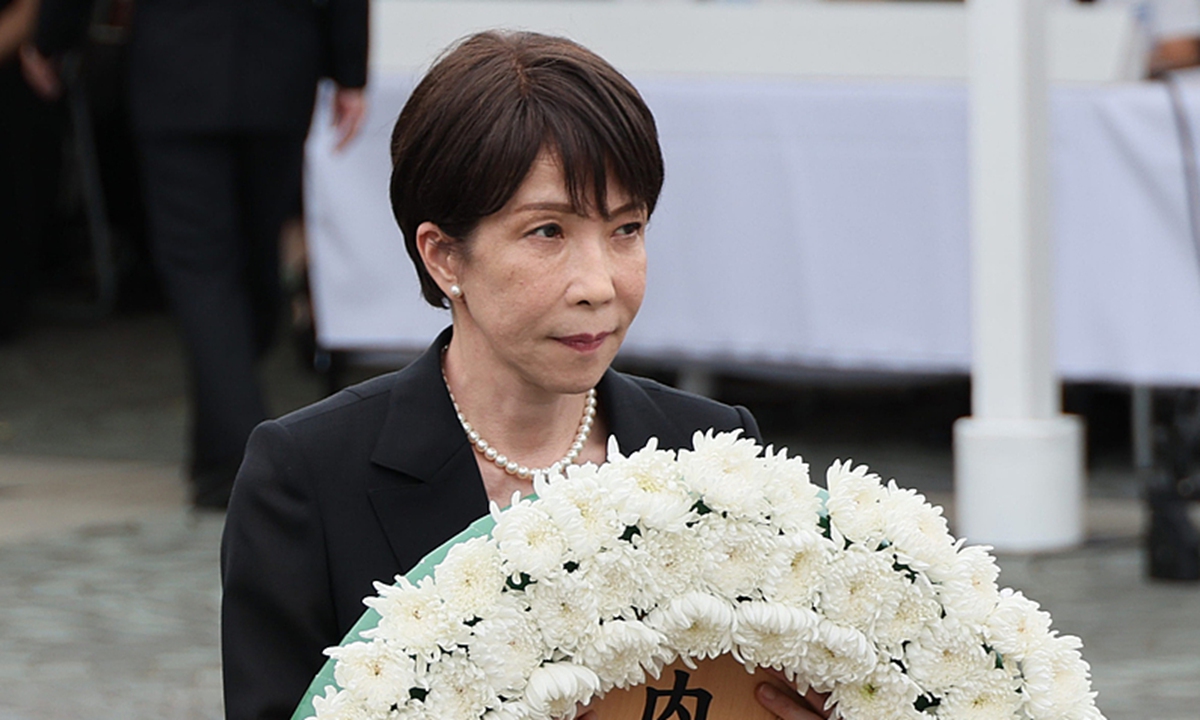
Chinese experts noted that, similar to her ambiguous remarks at the memorial ceremony in Hiroshima, Takaichi stopped short of making a clear commitment to maintaining the Three Non-Nuclear Principles in the future, as her government's stance on nuclear issues has sparked concern and anger among the Japanese public. They also warned that, given Japan's lack of thorough reflection on its wartime aggression, Tokyo's moves to dilute the Three Non-Nuclear Principles should raise alarm across the international community.
"Our country firmly upholds the three non-nuclear principles, and under the pledge that 'Nagasaki shall be the last city to suffer a nuclear attack,' we are promoting realistic and practical initiatives toward the realization of a world without nuclear weapons," Takaichi claimed, according to the Japan Times.
But unlike previous prime ministers, many of whom had pledged that Japan would "continue to uphold" the principles, Takaichi merely described the government's current position without making an explicit commitment about the future, per the report.
As Hiroshima observed the 81st anniversary of the US atomic bombing of the city on Thursday, Takaichi also emphasized that Japan pledges to achieve a world free of nuclear weapons while upholding the Three Non-Nuclear Principles, despite Japanese media noting that she has left the door open for future revisions.
Takaichi's remarks in Hiroshima and Nagasaki that Japan upholds the three non-nuclear principles were largely seen as a reaffirmation of the country's existing policy position rather than a pledge to maintain the principles in the future, Liu Jiangyong, a professor at the Institute of International Studies at Tsinghua University, told the Global Times.
Liu said that currently, some Japanese officials' dangerous remarks on nuclear have sparked criticism among Japanese society. He pointed out that Takaichi only referred to Japan's current adherence to the principles, without explicitly committing to preserving them going forward. Her subsequent focus on broader goals such as achieving a "world without nuclear weapons" has further fueled questions over her actual policy intentions.
Japanese Defense Minister Shinjiro Koizumi claimed in an online program released in July that discussions on nuclear weapons were necessary to strengthen Japan's defense capabilities, according to Kyodo News. While acknowledging that the issue was difficult to discuss in Japan, he claimed it was something that "could not be avoided."
Opposition to the Takaichi administration's nuclear-related moves has emerged across Japan, including from local governments, media organizations and civil society groups.
According to statistics from the Japanese Diet, at least 128 local assemblies across the country had submitted written opinions to the central government or parliament between Takaichi's inauguration on October 21 last year and July 28 this year, calling for the country's Three Non-Nuclear Principles to be upheld, according to Xinhua News Agency.
In an interview with the AFP, 82-year-old Satoshi Tanaka, a campaigner who survived the 1945 attack on Hiroshima expressed frustration that current political leaders like Takaichi are focusing on military capacity at the expense of diplomacy.
"There is so much talk about national security. What about building peace through diplomacy?" he said.
Responding to a question concerning the Japanese authorities are rebuilding Japan's war machine, seeking to revise the Three Non-Nuclear Principles, and pursuing nuclear sharing with the US, even the possession of nuclear weapons, Chinese Foreign Ministry spokesperson Lin Jian said on Thursday that the devastation and tragedies brought by nuclear weapons should never repeat themselves. That said, the particular context of the nuclear explosions should all the more be remembered and the lessons of Japanese militarism's aggression and expansion must forever serve as an alarm.
The Tokyo's moves on nuclear policy have also raised concerns in the international community.
Russia considers the rhetoric of Japanese authorities regarding the need for Japan to revise its Three Non-Nuclear Principles provocative and unacceptable, Russian Ambassador to Japan Nikolai Nozdrev said in an interview with RIA Novosti, which was published on Saturday.
Responding to Koizumi's remarks on nuclear discussion, Nozdrev said "This is the first time in Japan's history, as the only country to have suffered atomic bombings in Hiroshima and Nagasaki, that a sitting defense minister has publicly called for lifting the 'taboo' on discussions related to nuclear weapons. We consider such rhetoric from official Tokyo provocative and absolutely unacceptable."
Japan has yet to fully reckon with its wartime aggression, thus any attempt by Tokyo to move toward acquiring nuclear weapons could pose serious risks to regional peace and global security, Lü Chao, an expert on the Korean Peninsula issue at the Liaoning Academy of Social Sciences, told the Global Times.
Such concerns have become more pronounced as Japan increasingly portrays China as a major security challenge while highlighting perceived threats from other countries, against such a backdrop, any further steps to dilute the three non-nuclear principles are likely to heighten concerns internationally, particularly among countries that suffered from Japanese aggression during World War II, said Lü.
。 高键对省消防救援总队长期以来给予抚顺的支持帮助表示感谢。他说,消防救援安全直接关系人民群众的生命财产安全和社会和谐稳定,是惠民生、保安全的一项重要基础工作。长期以来,全市消防救援队伍发扬优良传统,围绕中心、服务大局,忠诚履职尽责,为促进抚顺经济社会发展和社会稳定作出了重要贡献。希望省消防救援总队继续关心支持抚顺消防救援工作和队伍建设,共同推动全市消防救援事业再上新台阶。

二 | 抚顺市委、市政府将深入践行以人民为中心的发展思想,与省消防救援总队紧密合作,全面提升防范化解重大安全风险、应对处置各类灾害事故的能力水平,防风险、保安全、护稳定、促发展。 王星感谢抚顺市委、市政府对消防救援工作的大力支持。他表示,省消防救援总队将充分发挥职能作用,强化队伍建设,配套科技装备,切实有效提升消防救援队伍整体素质和战斗能力,切实守护好全市各项事业发展和人民群众生命财产安全。 市委副书记、组织部部长呼延广玮,副市长刘畅参加。 责任编辑:刘春阳。
Current article:http://6v1emyg.laonenpeidiebenhuaiyunnangshi.cfd/fvucdpn/rs60zm.html
Published on:22:55:58
我的网站最近更新
- 中国气象局解析“台风扎堆出现”
- 'China travel' fuels 'China shopping' boom
- 福建省防指终止防台风应急响应并维持防汛三级应急响应
- 傅首尔新片《爸爸咪呀》四天仅6万票房!网传5千万投资
- 漳州水产种业再添优质新种
- 岳修虎副主任赴中国农科院调研农业科技创新工作
- “突击队”助高铁项目攻坚
- 本地餐饮业者进驻英国 面临运输成本与供应链挑战
- 选二单日369万!陕西福彩快乐8赠票持续升温
- 球队防守变好的原因?库里:追梦DPOY 大家都展现出了求胜欲
- 张韶涵成都演唱会因身体不适暂停,现场打出字幕“对不起,请给我三分钟”,吸氧休息后重返舞台,向歌迷致歉:“别担心,不行的话会喊停”
- 特斯拉中国产Model Y已运抵印度 7月当地开设展厅
- 江西银行回应“爱她就贷她回家”:本行没有“彩礼贷” 将依法维权
- 罗马诺:巴尔德希望留队竞争巴萨主力位置 决定权在巴萨手中
- 광진구, 민선9기 공약 우선순위 주민에게 묻는다…온라인 설문조사
- 拜登:美国降低通胀还需要更多时间
- Photos: Saif Ali Khan and Karisma Kapoor Visit Deol Residence
- 广州机动车停车计费单位时长从半小时调整为15分钟:单日最高收费限价200元
- 土司工坊价格调整引发热议,企业承诺持续提供优质服务
- PM to unveil India made HTT-40 for IAF today
- 博主用AI预测《英雄联盟》S12冠军是RNG或JDG:曾押中高考作文
- 独属老玩家的怀旧回忆!腾讯《天堂2:盟约》梦回网吧时代
- AT去年刚建的人行横道被拆除,奥克兰纳税人的钱就这么糟践?!
- 河北五超·微视频|沧州队球员马越带伤重返赛场,全场高喊 "马越加油"
我的网站热门资讯
- 有一种幸福叫“家门口就业”——连山区党建引领构建社区乐业新生态
- 任发政谈蛋白产业未来攻关重点:最大化保留蛋白质原始结构与活性
- OPPO 官宣屏幕双产线全新升级,推出「新一代明眸护眼屏」
- 每体:罗德里参加巴萨今日合练,可能入选对阵毕巴大名单
- कानपुर में निजी कोआपरेटिव सोसाइटी का खेल, दोगुणे का लालच दे 500 लोगों का एक करोड़ लेकर फुर्र
- 洛杉矶大火复盘:为何天灾令该地区成为一个“火药桶”?美国专家这么看
- 《GTA6》下次泄露实机投票 “小镇”占7成 高跟鞋败
- 名记:科尔希望库明加提升组织能力 做到快速阅读比赛&减少停球
- 推进城市排水设施改造提升道路排涝通行能力
- 包含大六座百万级旗舰产品 阿维塔将在2030年内推出17款全新产品
- 再添穿黄“新动脉” 济南跨黄通道布局进一步完善
- Xi to address late Chinese leader Jiang Zemin's centenary commemoration
- 早财经丨贵阳贵安今日全域开展核酸检测和抗原自查;一场脱口秀带火“600759”,公司回应;泽连斯基:乌军已控制东部和南部6000平方公里土地_月饼_地震
- नोएडा में जल्द आईटी-आईटीईएस योजना, ई-नीलामी से भूखंड आवंटन
- 3-1夺冠!中国女乒29岁王牌复苏:组最强豪阵剑指世乒赛
- 国内新租赁经济报告:存款冲突,信用豁免将取代
- 1月29日在“中国父母”的“女儿版”中更新:快速抚养女孩
- SS Rajamouli’s Varanasi to Resume New Shooting Schedule
- 阿里巴巴股价跳空低开5%至69港元 再创上市以来新低
- 缓解东苕溪流域防汛压力 余杭北湖滞洪区6闸全开分洪
- 8行代码搞定的事拖了近两年!AMD EPYC Zen 5服务器终获单CCD温度监控
- 周末到河北 不止近与美!丨冀时新闻主播说
- 卫生问题
- 이란·오만, 호르무즈 ‘임시 항로’ 합의